Kira's Fall: The Tragic Deconstruction of Light Yagami in Death Note
He started with the best intentions, but ended as a monster. We analyze Light Yagami's psychological collapse from high school student to "Kira" in Death Note.
We all know the ending: Light Yagami, defeated in the warehouse, screaming for L to save him as he dies from Ryuk's notebook. It’s easy to dismiss him as a generic psychopathic villain.
But the brilliance of Death Note is that Light Yagami is a tragic figure. He is not a monster born, but a monster made by the burden of absolute power.
The Burdens of Genius
At the start of the series, Light is the "perfect" student. He is bored, but he is fundamentally moral. He finds the world "rotten," but his first uses of the Death Note are against genuinely evil people. He takes on the role of Kira not out of a desire for wealth, but out of a genuine, if arrogant, desire to create a utopian world.
The true tragedy of Light Yagami is that the Death Note acts as a catalyst for his massive, fragile ego.
The Murder of the Self
The moment L appears, Death Note stops being a moral experiment and becomes a competitive game. Light is forced to compromise his own morals to win. He goes from killing criminals to killing an innocent police detective, Raye Penber, and his fiancée, Naomi Misora.
This is the central irony: To become the God of the new, peaceful world, Light had to become the very thing he claimed to hate—a murderer. He murdered his own humanity to preserve his identity as "Kira." By the end, he was no longer a person; he was just a shell filled with absolute ambition and the desperate fear of being caught.
You Might Also Like
View All→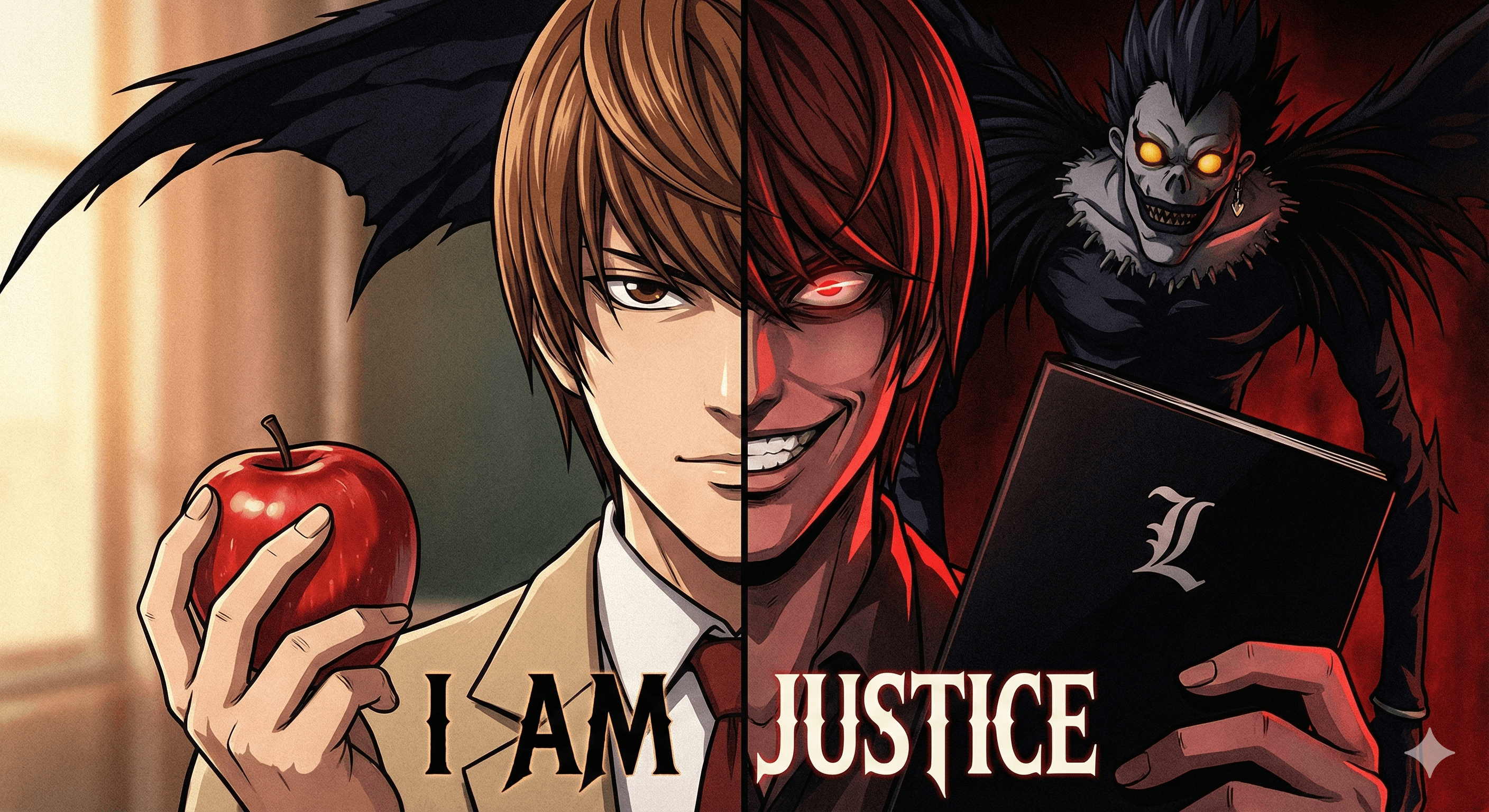
Savior or Psychopath? Why We Still Debate Light Yagami 20 Years Later
If you had the power to kill criminals with a name, would you do it? We analyze the moral decay of Light Yagami in Death Note and why the battle between Kira and L is the greatest chess match in anime history.
Perfect Blue: The Scariest Anime Ever Made (And Why It's More Relevant Today)
Before social media, Satoshi Kon predicted the horror of the online persona. We analyze Perfect Blue and the loss of the self in the digital age.
The Nameless Monster: Dissecting Johan Liebert's True Identity
He is considered the greatest villain in anime history. But who is Johan Liebert? We dive into Naoki Urasawa's Monster to dissect the psychology of pure nihilism.
📚 Enjoying our content? Explore by category or browse all articles